

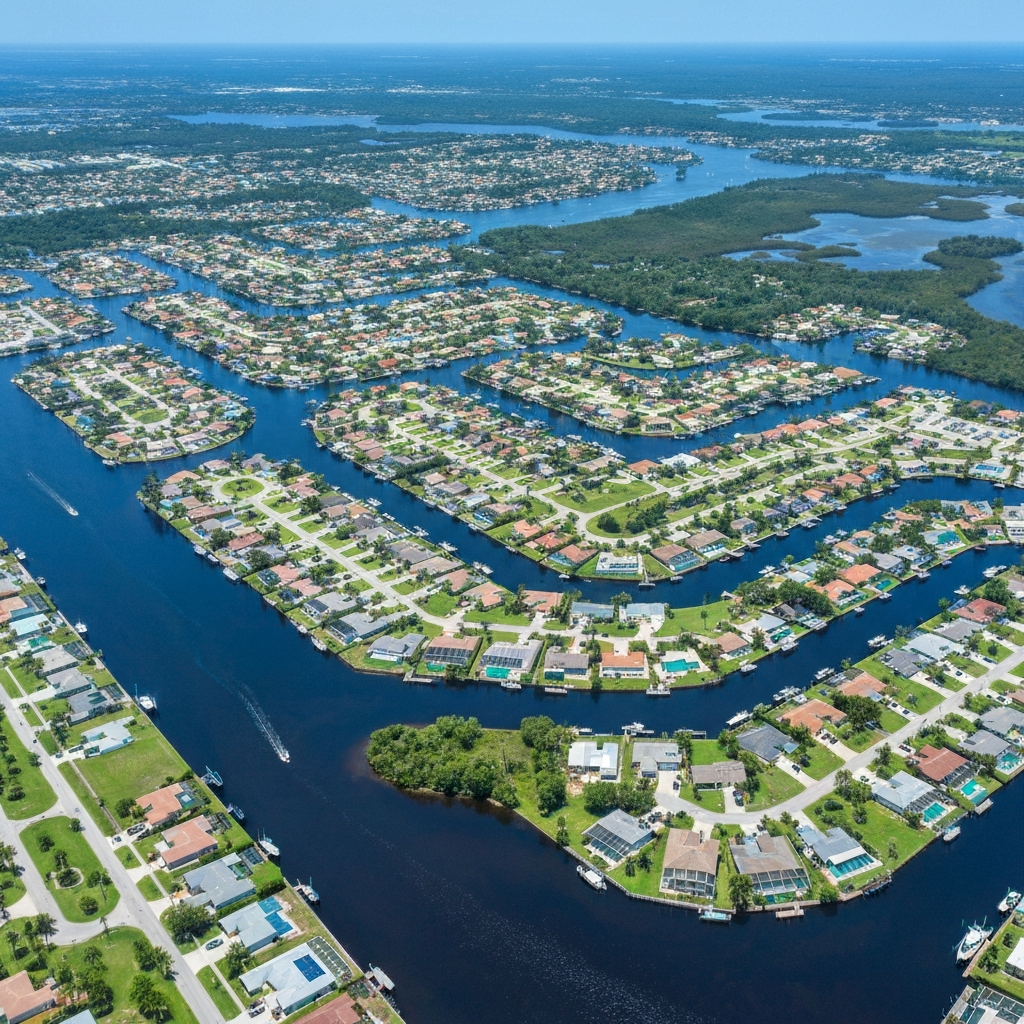
As global climate patterns continue to evolve, communities worldwide are experiencing significant environmental shifts. Cape Coral, Florida, known for its extensive canal system and coastal location, is particularly susceptible to these changes.
Rising Sea Levels
One of the most pressing concerns is the rise in sea levels. Studies indicate that Cape Coral’s low-lying topography and extensive canal network increase its vulnerability to flooding. Projections suggest that by 2050, the city could face substantial challenges related to sea-level rise, necessitating proactive planning and adaptation strategies.
Increased Hurricane Activity
Global warming has been linked to more intense and frequent hurricanes. Cape Coral’s coastal position makes it susceptible to these powerful storms. The devastation caused by Hurricane Ian in 2022 underscored the need for robust emergency management and resilient infrastructure to withstand future events.
Extreme Heat and Drought
Rising global temperatures contribute to more frequent and severe heatwaves. Cape Coral experiences high heat and humidity during summer months, with ‘feels-like’ temperatures often exceeding 100°F. Additionally, prolonged dry seasons can lead to drought conditions, affecting water resources and increasing the risk of wildfires.
Community Resilience Efforts
In response to these challenges, Cape Coral has been actively enhancing its resilience. The city’s Emergency Management & Resilience department focuses on mitigating risks through coordinated resources, education, and partnerships. Efforts include updating building codes, improving drainage systems, and promoting water conservation practices.
Understanding the local implications of global climate trends is crucial for Cape Coral residents. Staying informed and engaged with community initiatives can help ensure the city’s sustainability and safety in the face of environmental changes.