

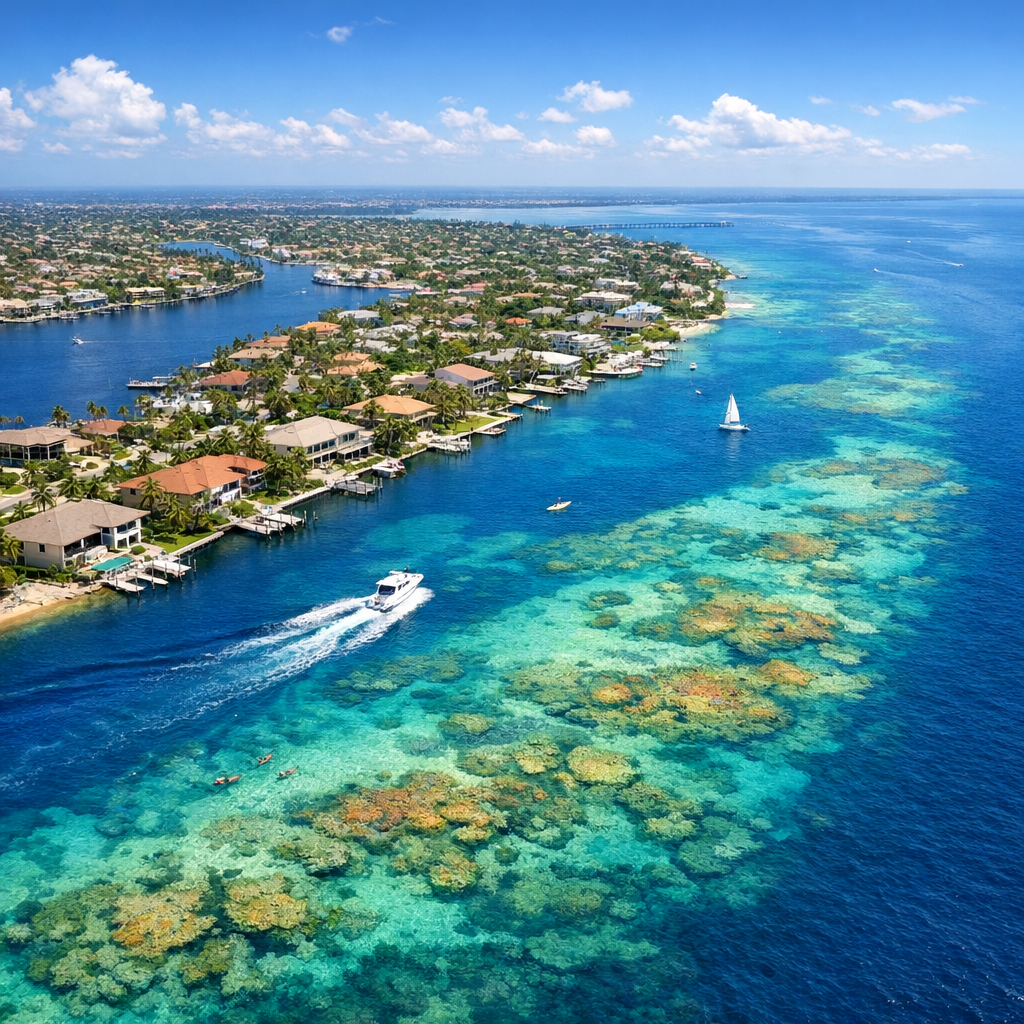
The world is currently experiencing its fourth global coral bleaching event, as announced by the United States National Oceanic and Atmospheric Administration (NOAA) and the International Coral Reef Initiative on April 15. Since February 2023, mass coral bleaching has been documented across at least 70 countries and territories, affecting both hemispheres and all ocean basins.
This event has been unprecedented, with over 74% of the world’s reef areas experiencing bleaching-level heat stress since January 2023, surpassing the previous record set during the third global bleaching event from 2014 to 2017. The Atlantic Ocean’s reef areas, including those in the wider Caribbean, have faced extreme levels of heat stress, leading to significant coral mortality.
For Cape Coral, Florida, this global phenomenon has direct implications. The city’s proximity to the Gulf of Mexico and its intricate canal system make it particularly vulnerable to the effects of coral bleaching. Healthy coral reefs are essential for maintaining marine biodiversity, protecting shorelines from erosion, and supporting local fisheries and tourism industries.
The loss of coral reefs can lead to a decline in fish populations, affecting both commercial and recreational fishing activities. Additionally, degraded reefs are less effective at buffering coastal areas from storm surges, increasing the risk of flooding and property damage during hurricanes.
Local initiatives, such as the annual International Coastal Cleanup organized by Keep Lee County Beautiful, play a crucial role in mitigating some of these impacts. By removing harmful trash and debris from our oceans and waterways, these efforts help protect marine life and maintain the health of our coastal ecosystems.
As residents of Cape Coral, it’s imperative to stay informed about global environmental events and their local repercussions. Participating in community cleanups, supporting sustainable fishing practices, and advocating for policies that address climate change can collectively contribute to the resilience of our marine ecosystems.